Mythopia Climatefarming
Terra Preta - Bio Kohle - Klimafarming von Hans-Peter Schmidt: Vor tausenden Jahren gelang es am Amazonas den damaligen Bewohnern ihre humusarmen Böden durch Anreichung von Holzkohle zu fruchtbarem Land zu verwandeln und da, wo heute nur noch Dörfer stehen, beeindruckend große Städte zu ernähren. Dank des neuen Verfahrens der hydrothermalen Karbonisierung, bei dem der in der Biomasse gebundene Kohlenstoff vollständig extrahiert und zu Bio-Kohle wird, wird jene historische Methode der sogenannten Terra Preta auch für die moderne Landwirtschaft interessant. Der Eintrag von Bio-Kohle führt nicht nur zur Aktivierung und Gesundung landwirtschaftlicher Böden, sondern erlaubt es, die CO2-Belastung der Atmosphäre zu verringern.... (Fortsetzung hier)
Sequestrieungspotential der Pyreg-Pyrolyse Anlage (hier)
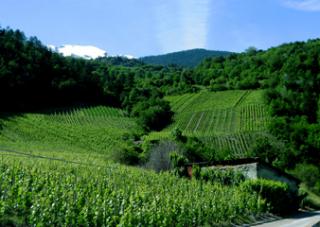
Klima-Farming - Mythopia Climate Project Version III: Beschreibung des von Mythopia lancierten Klimafarming Projektes im Wein- und Obstbau... (mehr hier)
Ithaka - in unserem Journal für Terroirwein, Biodiversität und Klimafarming finden Sie weiter Artikel über Bio-Char, Forschungsergebnisse und Pyrolysetechnik
Das Geheimniss der Schwarzen Erde - sehr lesenswerter Artikel über die Geschichte der Terra Preta und die Perspektiven ihrer künftigen Nutzung -von Lucian Haas
Ithaka
A handfull of Carbon von Johannes Lehmann: Locking up carbon in soil makes more sense than storing it in plants and trees that eventually decompose. Can this idea work on large scale? Artikel aus dem Magazin NATURE 2007... (mehr hier)
Kohle aus dem Kochtopf von Christian Wüst: Spiegel-Artikel über den neuen Prozess der hydrothermalen Karbonisierung und ihrer Perspektiven.
Bio-Char Sequestration in terrestrial Ecosystems by Johannes Lehmann, Jhn Gaunt and Marco Rondon: The application of bio-char to soil is proposed as a novel approach to establish a significant, long term, sink for atmospheric carbon dioxide in terrestrial ecosystems. Apart from positive effects in both reducing emissions and increasing the sequestration of greenhouse gases, the production of bio-char and its application to soil will deliver immediate benefits through improved soil fertility and increased crop production.
Mycorrhizal responses to biochar in soil - concepts and mechanisms by Daniel Warnock: Experiments suggests that biomass-derived black carbon affects microbial populations and soil biogeochemistry. Here we focus on biochar effects on mycorrhizal associations.
Black Carbon Increases Cation Exchange Capacity in Soils by B.Liang: Black Carbon may significantly affect nutrient retention and play a key role in a wide range of biogeochemical processes in soils, especially for nutrient cycling.
Biological nitrogen fixation increases with bio-char additions by Marco Rondon: This study examins the potential, magnitude, and causes of enhanced biological N2 fixation through bio-char additions.
Eine relativ vollständige Publikationslist finden Sie hier